


It’s the Wild West of software again, and the new buzzword echoing across the digital frontier is “agent.” Suddenly, everything is “agentic,” and if you’re like us at Nirmata —deep in the trenches of the AI revolution —you know that a simple label is doing a heck of a lot of heavy lifting. An “agent” can mean radically different things in your architecture.
Here at Nirmata, we’ve been wrestling this concept into a practical taxonomy. Because if you’re going to build the next generation of software, you’ve got to know what kind of digital lifeform you’re dealing with.
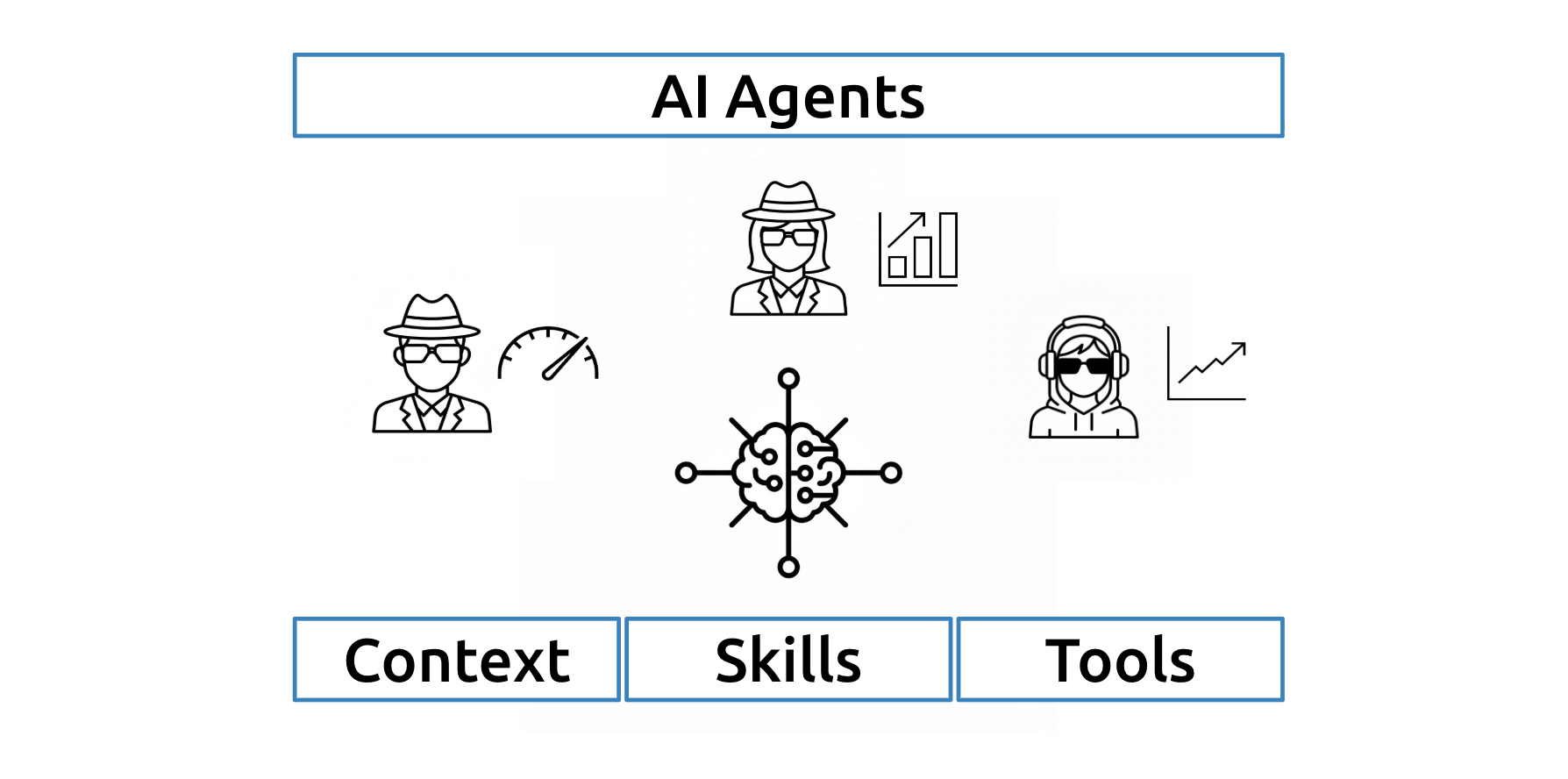
The Essence of the Agent
What is an agent, anyway? Strip away the hype, and it’s a software entity with agency. It doesn’t just execute a script; it makes independent decisions to achieve a goal.
This concept isn’t a post-LLM invention. Back in the days when Netscape was king and the web was new, computer science texts were already charting this territory. They called agents “objects with attitude”—a prescient nod to the autonomy GenAI has now unleashed.
The Old Guard: Pre-AI Agents
Before the Large Language Model took center stage, most software agents were pure logic. Think of them as hyper-efficient digital automatons:
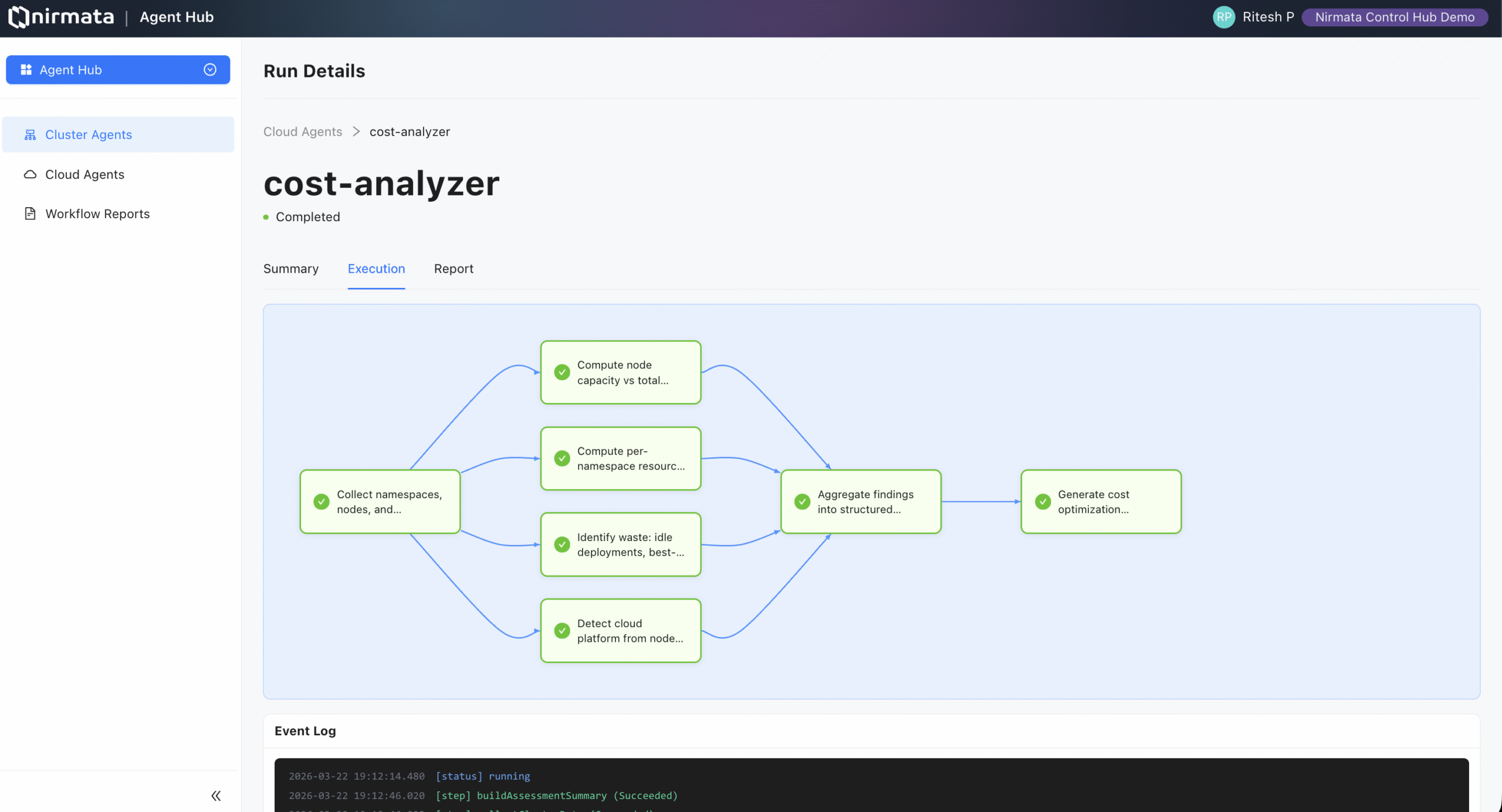
- They were implemented as workflows—sequences, or complex Directed Acyclic Graphs (DAGs).
- They followed a pre-programmed path, using context (user input, variable data) to decide which next step in the hard-coded sequence to execute.
Then, the LLM arrived. It’s the digital equivalent of granting a machine free will. This new computational power allows agents to reason and make decisions independently, without a step-by-step flowchart dictating their every move. They now have true “attitude.”
We’ve identified three critical classifications for these new AI Agents, based on where they live and how much digital freedom they are granted.
1. Personal Agents – Your Digital Doppelgänger aka The Assistant
These are the high-fliers, the digital go-getters.
- Identity: They act on your behalf, often using your identity.
- Execution Environment: They run on your personal device—your laptop, your phone—giving them access to all the same systems and tools you have.
- Agency Level: HIGH. These agents are encouraged to be creative. They’re non-deterministic; they are prized for finding new and novel ways to solve a problem. Think of them as your personal, highly-motivated digital intern.
Caution: use these agents with “human oversight” – your assistant acts on your behalf and you need to stay in charge. If you run these in a CI or production environment sandboxing is critical.
2. Service Agents: The Production Workhorse
The moment an agent moves from your personal device to a production environment—say, a Kubernetes cluster—the rules change. Reliability trumps creativity.
- Identity: They operate autonomously with their own identity.
- Execution Environment: They live in production systems where stability is paramount.
- Agency Level: LOW (Constrained). You cannot afford a “creative” agent breaking production. Their outcomes must be highly deterministic and reliable. They are constrained with sandboxing and strict least-privileged access to tools and skills.
The Smart Trade-off: Service Agents use LLMs only when necessary. They reserve the reasoning power of the LLM for non-deterministic data tasks but rely on highly efficient, traditional workflows (direct API calls, “code mode” execution) for the rest. This is crucial for keeping token usage efficient and adhering to context engineering best practices at production scale. When autonomy is allowed, sandboxing is once again required.
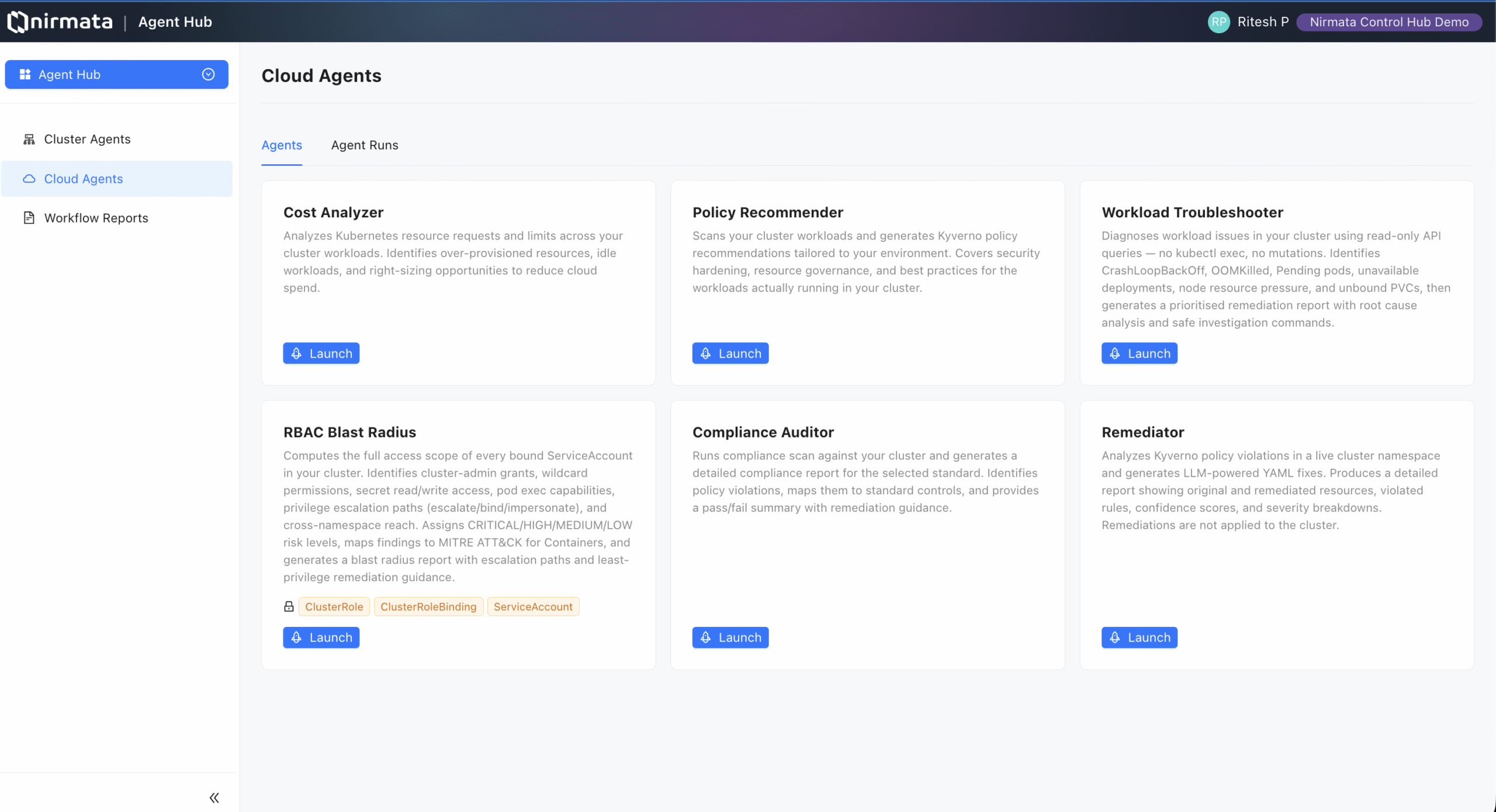
3. Cloud Agents: Agents-as-a-Service
A specialized form of the Service Agent, the Cloud Agent is the outsourced workhorse.
- Identity: Own.
- Execution Environment: They run on someone else’s system—a SaaS platform or a cloud environment.
- Example: Consider the new wave of AI coding tools, like Cursor, which let you launch agents directly in their web console. Nirmata, too, offers Cloud Agents that platform engineers can deploy with a single click onto their managed clusters. They bring the constrained reliability of the Service Agent to a managed, external platform.
The Field Guide: Taxonomy of Digital Agency
Naming matters. As the entire software industry pivots to embrace agency, it is vital to know exactly what kind of digital entity you are dealing with. This simple but powerful classification—based on execution environment and the degree of agency—is how we’re mapping the future.
| Identity | Agency | Execution Environment | Tools & Skills | Autonomy | |
| Personal Assistant | User | High | Personal Device | Many | High |
| Service Agent | Own | Low | Production Systems | Restricted | Medium |
| Cloud Agent | Own | Low | SaaS / Cloud Systems | Restricted | Low |
The age of the Agent is here. Know your agent types, or get left behind in the digital dust.

