A big shift is underway in enterprise software. In our recent post, we argued that the seat-based, ticket-driven SaaS era is giving way to Outcome-Driven Agentic Software (ODAS) – systems built around agents that deliver outcomes, not dashboards that collect clicks.
As Navin Chaddha puts it, the winners will be outcome-first, not AI-first.
For platform and infrastructure teams, this isn’t theoretical. It’s already happening.
What Is Outcome-Driven Agentic Software (ODAS)?
Outcome-Driven Agentic Software (ODAS) is a software model where AI agents autonomously detect issues, propose changes, validate against policy, deploy safely, and continuously verify results — all while producing structured audit evidence.
Traditional infrastructure tools were built for a human-operated world:
alert fires → investigate → open ticket → write change → get approval → deploy → audit later
That chain works when your fleet is small and your change velocity is low. It breaks badly at scale.
A critical misconfiguration sits open for days while a ticket moves through a backlog. An audit arrives and the team spends weeks reconstructing what changed, when, and why—pulling logs, chasing approvals, manually assembling evidence that should have been produced automatically. One engineer becomes the bottleneck on dozens of changes because every approval requires human judgment—even for low-risk, well-understood fixes.
The cost isn’t just slowness. The model cannot keep up with modern infrastructure.
ODAS flips the center of gravity. The new expectation is:
detect → propose change (PR/patch) → run validation → deploy safely → verify continuously → produce evidence
The Nirmata AI Governance Platform for Agentic Infrastructure
We’re building Nirmata as a platform for exactly this shift: outcome-driven agents with shared context, strong governance, and clear controls.
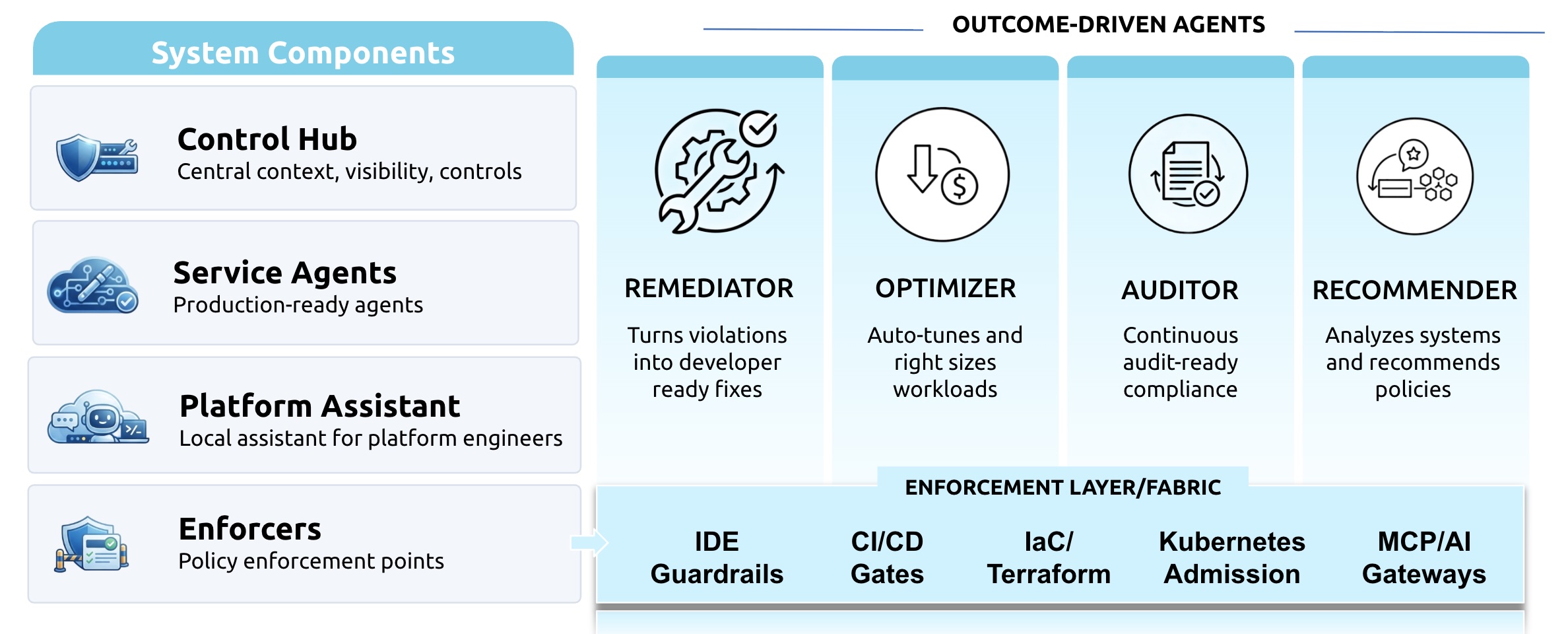 At a high level, the platform is designed around three ideas:
1) Outcome-Driven Agents (Not Generic AI Assistants)
Agents built to deliver specific, measurable outcomes:
- Remediation: turn violations into developer-ready fixes
- Optimization: right-size and reduce waste
- Audit: continuous, audit-ready compliance evidence
- Recommendations: policy and best-practice guidance
2) A Control Center for Visibility and Oversight
As automation increases, teams need one place to:
- understand what’s happening across environments
- see what agents changed and why
- step in only when review/approval is needed
That’s how you support the real progression from assistive workflows to supervised autonomy to trusted autonomy—without losing control.
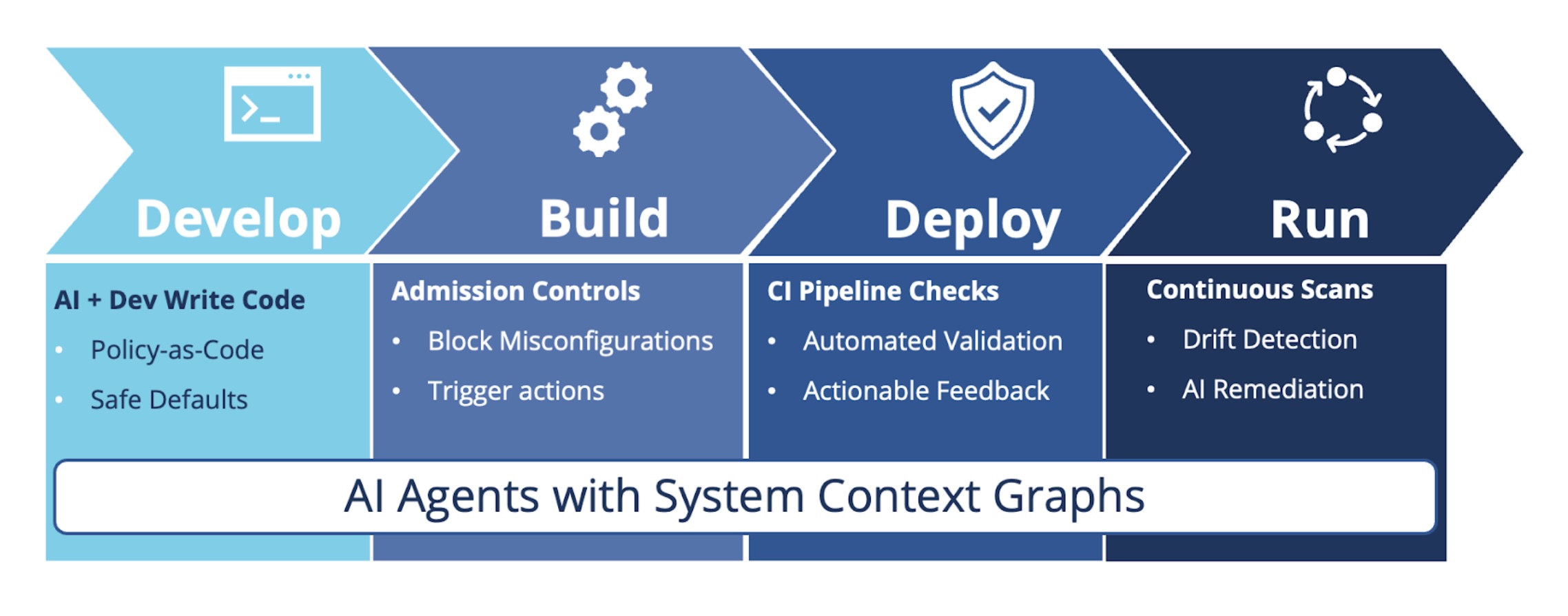
3) Unified Policy Enforcement Across the Delivery Lifecycle
The critical difference between “agents that demo” and “agents that run production” is governed execution, not smarter recommendations.
In production, agent actions must be controlled end-to-end:
code → pipelines → runtime
…and those controls must be consistent. Not “one set of rules in CI and another in the cluster.” Not “logs here, policy checks there.” You need one intent enforced everywhere—and one evidence trail that proves what happened.
This is where architecture matters. Nirmata’s advantage is that we already have a Kyverno-powered enforcement fabric across multiple control points, so the same policy intent can be applied:
- before a change ships (developer workflow + CI gates)
- during deployment (admission enforcement)
- after deployment (continuous verification + reporting)
That’s what enables production-grade ODAS: a consistent rulebook and a consistent record—across the entire change lifecycle.
What Are Agent Guardrails?
The ODAS model is compelling, but infrastructure is a high-stakes domain. If autonomy grows faster than governance, organizations hit predictable failure modes:
- risky or overly broad changes
- inconsistent enforcement across environments
- hard-to-reconstruct audit trails
This is where Agent Guardrails becomes the missing layer.
The core buyer requirement is simple: customers don’t want magic. They want confidence.
In infrastructure, confidence comes from knowing every automated change is:
- bounded
- reviewed when needed
- consistently enforced
- provable after the fact
Unified Agent Guardrails: Trusted Change Management for AI Agents
Unified Agent Guardrails is our answer to confidence at scale.
It’s a change-management layer for agents that lets teams increase autonomy safely—without changing how they already operate.
What it means in practice
1) Bounded changes
Agents can only make narrowly defined changes within a defined scope.
2) Time-bound authority
When higher-risk actions are needed, agents receive limited rights that expire and can require approval.
3) Audit-grade evidence
Every action produces a structured record of what happened and why it was allowed—so teams can review, audit, and replay changes deterministically.
This is how you bridge the adoption curve:
- Stage 0: human-only changes
- Stage 1: agent-assisted (PR-first)
- Stage 2: supervised autonomy (auto-approve low risk)
- Stage 3: trusted autonomy (closed-loop operations)
And it’s possible because our policy layer was built for enforcement, not just reporting—the same Kyverno-powered controls that govern production Kubernetes clusters today are the guardrails that govern agent actions tomorrow.
What Trusted Autonomy Looks Like in Practice
Here’s what Stage 3 looks like in practice:
It’s 2am. An agent detects a misconfigured ingress controller, proposes a fix, validates it against policy, and deploys it – without waking anyone up.
Six weeks later, an auditor asks:
- who authorized that change
- what policy it satisfied
- whether it has been enforced continuously since
You pull up a structured, deterministic record and answer all three questions in seconds.
No ticket. No scramble. No gap between what your infrastructure does and what you can prove it does.
That’s the world we’re building toward at Nirmata—and Unified Agent Guardrails is how we get there.